
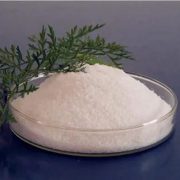
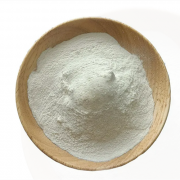
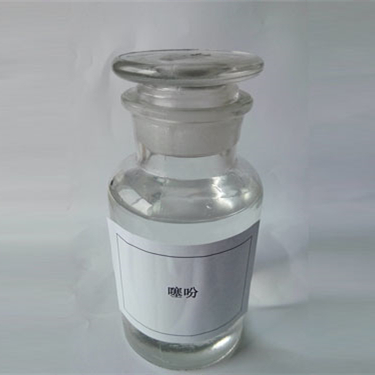
Thiophene
- Description
- Inquiry
Thiophene is a five-membered heterocyclic compound containing a sulfur atom. Molecular formula: C4H4S. It exists in coal tar and shale oil; crude benzene and crude naphthalene obtained by fractionation of coal tar contain about 0.5% in crude benzene. It is a colorless liquid with an unpleasant odor. Melting point: -38.2℃, boiling point: 84.2℃, relative density: 1.0649 (20/4℃). Since its boiling point is 84℃, which is close to that of benzene, it is difficult to separate them by distillation. It is soluble in ethanol, ether, acetone, benzene, etc. Thiophene is aromatic, similar to benzene, and is more susceptible to electrophilic substitution reactions than benzene, mainly at the 2 position. The hydrogen at the 2 position of thiophene is also easily replaced by metals to produce derivatives such as mercury and sodium. The thiophene ring system has a certain stability to oxidants. For example, alkyl-substituted thiophene can form thiophene carboxylic acid after oxidation. Using metallic sodium to reduce thiophene in liquid ammonia and methanol solution can produce dihydrothiophene and some open-ring compounds. Using catalytic hydrogenation to reduce thiophene can produce tetrahydrothiophene. In industry, thiophene is produced by reacting butane with sulfur. In the laboratory, thiophene is produced by reacting 1,4-dicarbonyl compounds with phosphorus trisulfide. Acetyl butanone reacts with phosphorus sulfide to produce 2,5-dimethylthiophene. Thiophene can replace benzene in many occasions and is used as a raw material for making dyes and plastics, but due to its more active properties, it is generally not as good as the products made from benzene. Thiophene can also be used as a solvent.
English name: Thiophene
English alias: Thiophene-2,5-d2; sulfur metalloCene branched clutter; furan Cyclopentadiene thia;
CAS No.: 110-02-1
EINECS No.: 203-729-4
Physical and chemical properties
56781
Preparation method: At present, the main distillation and extraction methods on the market are hydrogenation refining, sulfuric acid refining and solvent extraction.
α-Thiophene derivatives are widely used in synthetic medicines, pesticides, dyes, chemical reagents, polymer additives, etc.
Thiophene ring-containing ** has better therapeutic effects than phenyl homologues. Some new analgesic drugs, such as hydroxyephedrine, suprofen, thioprofenic acid, thioprofenic acid, pizothiazide, su** and more than 10 other analgesics with significant efficacy are all derivatives of thiophene. Thiophene derivatives can also be used to synthesize spasmolytic drugs such as tiquinoxaline bromide, anthelmintic drugs such as thiophenethylpyridine, anticholinergic drugs such as cyclohexylmethanol, antispasmodic drugs such as azothiazide, clopidogrel, anticholine drugs such as thiophenethylamine, thiophenediamine, methadone, thiophenediamine and hundreds of other drugs. Thiophene-α-acetic acid is mainly used to synthesize more than 20 kinds of analgesics such as vanguard mycin I, vanguard mycin II, cefoxitin, ceftriaxone, ceftriaxone, furonic acid chloranil, etc. It is also used in the synthesis of various pharmaceutical products such as cardiovascular drugs, lipid-lowering drugs, anti-ulcer drugs, platelet aggregation inhibitors, cardiovascular diastolic drugs, 5-lipoxygenase inhibitors, etc.
A series of yellow, red and purple dyes can be synthesized from diaminothiophene, which are suitable for coloring fibers such as polyacrylonitrile and polyester; derivatives of alkylaminothiophene are sensitizers for instant photographic emulsions; some α-thiophene derivatives are currently the best chelating agents in the world. If the pH value is properly controlled and the appropriate extractant is used, they can be used to separate dozens of precious metal ions such as zirconium, uranium-thorium, and directly used as anti-counterfeiting agents for RMB.
The anti-tumor effect of β-diketone complexes has attracted great attention. It is the first transition metal complex to enter clinical anti-tumor research after cisplatin. It has obvious therapeutic effects on colon cancer and rectal cancer, has low toxicity, no bone marrow suppression, and no mutagenicity, and will soon be on the market.
α-thiophene derivatives are also widely used in other fine chemical fields. For example, 2,5-bis(5-tert-butyl-2-benzoxazolyl)thiophene can be used as a fluorescent brightener for plastics, injection molding materials, EVA foaming and rubber products, synthetic fibers, soft plastics, light-converting agricultural films, natural lacquers, paints, coatings, etc.