Industrial Grade Guar Gum Powder Manufacturers in China
High-performance guar systems engineered for paper mills, oilfield fracturing, textile printing & construction materials.
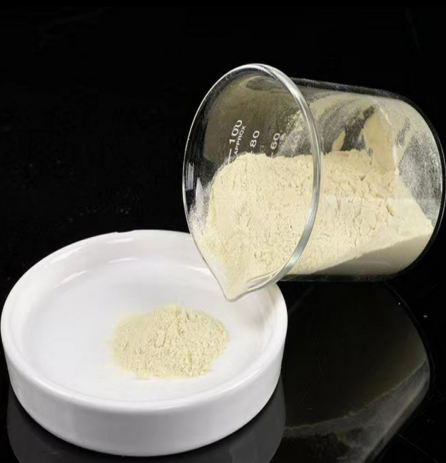
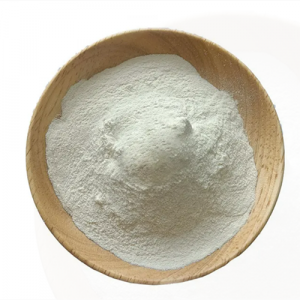
Source: It comes from the endosperm of the one-year-old leguminous plant – guar bean.
Essence: It is a natural polymer, mainly composed of galactomannan. You can think of it as a very long “molecular chain”, which can hold a large number of water molecules.
Core Function: Thickening and Stabilizing
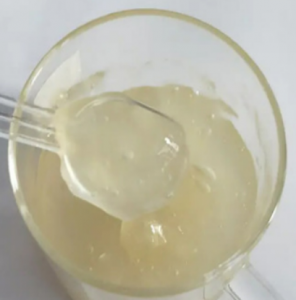
The most powerful characteristic of guar gum is its hydration. It can quickly dissolve in cold water to form a viscous solution.
It is a “technical functional ingredient” that can be used in the food industry, cosmetics industry, textile and paper industry, as well as in oil extraction and other fields.
High-performance guar systems engineered for paper mills, oilfield fracturing, textile printing & construction materials.
Guar gum is one of the key components in our Technical Functional Ingredients.KosNature have been working with industrial guar gum long enough to know that it is never a single universal-grade product.
Every factory uses it differently, and the problems they encounter can be totally opposite.
Paper mills struggle with drainage vs. formation.
Oilfield operators care only about hydration speed and high-temperature tolerance.
Textile printers worry about strike-through.
Construction plants want feel, open time and anti-slip.
Because of that, we treat guar gum as a function-specific system, not a commodity powder.
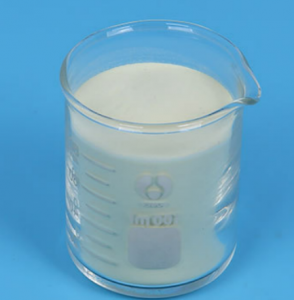
Our main supply systems include:
Cationic Guar Gum — for wet-end performance in papermaking
Fast Hydration Guar — for oilfield fracturing
Hydroxypropyl Guar / CMHPG — for high-temperature wells
Textile Printing Grade Guar — anti-bleeding print paste
Construction Grade Guar — mortar, gypsum, tile adhesive
General Industrial Guar Gum — for dispersion & viscosity control
When a new buyer asks which one to choose, the simplest and truest rule we give is:
If drainage is slow → use cationic.
If viscosity must rise fast → use fast hydration guar gum.
If you’re dealing with heat → Hydroxypropyl Guar Gum (HPGG) or Carboxymethyl Guar Gum (CMGG)
If prints are bleeding → textile grade guar gum or Carboxymethyl Hydroxypropyl Guar Gum
If hand-feel matters → construction grade guar gum.
This is not theory — it’s what we observe from actual factory visits and troubleshooting.
During the past decade, many mills and plants tried replacing guar gum with cheaper materials such as PAM or modified starch.
We’ve seen this many times, and the results are often the same:
Drainage improves but formation collapses
Paper becomes cloudy or uneven
Systems become sticky under shear
Gel breaks down under heat
Viscosity drifts throughout the shift
With guar gum, the benefit is not “low cost”—it is predictability under complex, real-world conditions.
This predictability is the reason industrial guar gum remains essential in demanding systems where performance cannot rely on a single number like “cps”.
In some systems, industrial processors also combine guar gum with modified starch to further stabilize viscosity under heating and shear.
Anyone who has only looked at viscosity numbers will misunderstand guar gum.
The real story is in how it behaves under stress:
1. Shear Recovery
How quickly does the viscosity bounce back after high-speed shear?
This decides whether a paper machine or mixer will run smoothly.
2. Temperature Curve
At 80–150°C, cheap guar collapses instantly.
High-grade HP guar and CMHPG maintain network structure.
3. Residue & Insolubles
Lower residue → cleaner screens, pumps, nozzles and sand packs.
4. Ion Compatibility
Hard water? High salinity? Some grades tolerate it, some don’t.
In real wet-end operations, two things constantly fight each other:
Drainage
Sheet formation
Traditional PAM + starch systems often fix one while destroying the other.
Cationic guar gum, however, improves both:
Faster drainage
Better formation (less cloudiness)
Stronger sheets
Improved filler & fines retention
More stable wet-end, fewer fiber jumps
A papermaker we work with in Germany once told us:
“After switching to cationic guar, it was the first time I saw drainage improve while formation got better. We didn’t believe it until we saw the sheet.”
We know the Oilfield engineers don’t care about fancy descriptions.
They care about:
How fast viscosity rises
How long it stays stable
How well it carries sand
Whether it breaks cleanly without residue
Fast Hydration Guar reaches usable viscosity in 30–60 seconds, which saves time and prevents uneven mixing on site.
Our CMHPG is built for deep & hot wells:
Stable at 30–150°C
Stronger network structure
Lower insolubles
Easier flowback
Lower breaker requirement
These details determine real-world performance, not just lab numbers.
The biggest problems for print houses are:
Edge bleeding
Poor water retention
Pattern distortion
Inconsistency during stroke
Our Textile-grade guar gum solves these issues:
High water-holding
High paste stability
Very low strike-through
Good compatibility with reactive dyes
Smooth flow during screen printing
One printing technician summarized it well:
“Same mesh, same dye — guar paste simply holds the edge better.”
In putty, gypsum and tile adhesive, guar gum contributes to:
Water retention
Smooth feel
Anti-slip
Better open time
When used with cellulose ethers, it creates a balance of smoothness + anti-sag that contractors notice immediately.
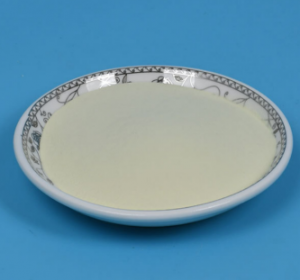
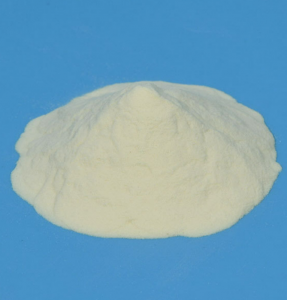
Viscosity (1%, Brookfield LV, 25°C): 3,500–4,500 cps
Moisture: ≤ 12%
Mesh: 200–300 mesh
pH: 5.5–7.5
Ash: ≤ 1.5%
Solubility: Cold-water soluble
Origin: China
Each system (cationic, HP guar, CMHPG, fast hydration, textile, construction) has its own technical data sheet — viscosity alone is not the full story. pls contact our tech team.

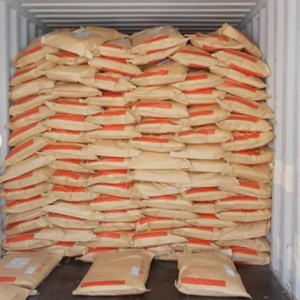
25 kg PP/PE bags
500 kg jumbo bags
OEM small-pack options
Stable yearly supply contracts available
Industries we serve:
Papermaking
Oilfield service
Textile printing
Construction materials
Powder processing
Documentation Available upon request: COA,MSDS,TDS,Sample (100–200 g)
KosNature is a long-term producer and technical supplier of natural and technical functional ingredients.
For guar gum, our advantage is not only supply capability, but the consistency of viscosity and hydration , Custom viscosity service.
✔ 15+ years manufacturing & export experience
Serving food, beverage, bakery, hydrocolloid blenders and ingredient distributors.
✔ Strickly viscosity control: ±5% batch difference
A critical parameter for food plants requiring predictable performance.
✔ Controlled granulation & dispersion
Available in 100–300 mesh depending on hydration speed requirements.
✔ Low-odor, clean-grade production
No solvent residues, no chemical modification.
✔ Full regulatory & technical support
COA, TDS, MSDS, ISO22000, HACCP, Hala.
For both food processors and ingredient distributors, we supply stable quality and long-term traceable batches.
The performance of different models on the production line varies greatly. A brief summary of our experience is as follows (also the most frequently asked questions by our customers):
Papermaking (Retention & Drainage) → Cationic Guar Gum (DS 0.04–0.06)
Improving dry and wet strength / stage retention → Cationic or Amphoteric Guar Gum
Oilfield fracturing (30–120°C) → Hydroxypropyl Guar / CMHPG (low residue)
Building materials (putty, coatings, tile adhesives) → Fast-hydration Guar / Pure Guar
Textile printing and dyeing (stabilizing paste) → High-viscosity pure guar gum
If you could inform us of the application, the method of application, temperature, pH value and the situation of stirring and shearing, we can quickly recommend the most suitable model.
We offer two types:
Standard hydration guarantee: Stable viscosity achieved within 20–40 minutes
Fast-hydration guar : Reaches 90% viscosity within 3 to 5 minutes.
Instant guar gum is mainly used for:
Fracturing fluid (the fracturing team doesn’t like to wait for the viscosity to rise)
Rapid Mixing System for Building Materials
On-site mixing of coatings
If you tell me your “actual mixing speed”, I can suggest whether you need the fast-hydration series or not.
Most oil fields prefer HPG or CMHPG for the following reasons:
Stable viscosity at high temperatures (up to 120°C)
Low residue, no clogging of channels
Strong sand-carrying capacity
It’s easy to break the gel and the flowback is clean.
Although the viscosity of common guar gum is high, it leaves a lot of residue and often causes formation damage in deep wells.
If you are an oilfield customer, you can directly tell me the well temperature, flowback time and viscosifier loading, and I can recommend a specific model for you.
Yes, it is particularly evident in the papermaking and oilfield systems: highly compatible with cationic retention AIDS (the higher the DS, the stronger the adsorption). It is compatible with silicate systems OK. Competitive adsorption may occur with anion systems (such as CMC), and the premixing sequence needs to be correct. If iron ions are encountered in an oil field, it will cause an abnormal decrease in viscosity. We usually recommend: Addition sequence: pH adjustment → bactericide → demulsifier → Guar Gum (shear water absorption stage). If necessary, I can provide you with a “Guar Gum Compatibility Guide”.
Yes, although this page focuses on industrial grades. We also offer High-viscosity food-grade guar gum
| Product: | Oxidized starch Potato Oxidized starch Corn Oxidized starch Tapioca Oxidized starch |
| Synonym: | Corn Flour; Maize Starch |
| CAS No.: | 65996-62-5 |
| Origin: | China |
| Packaging: | 25Kg/850Kg Bag |
Xanthan Gum
CAS:1138-66-2
E No.: E415
Chemical Formula:C35H49O29
Mesh:80/200mesh
MOQ:1000kg
Delivery time:15~20 days
Certification:ISO,kosher,FCC, IV
Shelf life:
2 years
Qty in 20′ FCL:18MT
Min. Order:1000KG
| Product: | Corn Starch |
| Synonym: | Corn Flour; Maize Starch |
| CAS No.: | 9005-25-8 |
| EINECS No: | 232-686-4 |
| Formula | (C6H10O5)n |
| Packaging: | 25Kg/Bag |
| QC: | HACCP, Kosher, Halal, Iso |
| Origin: | China |
| Product: | Corn Starch |
| Synonym: | Corn Flour; Maize Starch |
| CAS No.: | 9005-25-8 |
| EINECS No: | 232-686-4 |
| Formula | (C6H10O5)n |
| Packaging: | 25Kg/Bag |
| QC: | HACCP, Kosher, Halal, Iso |
| Origin: | China |
| Product: | Corn Starch |
| Synonym: | Corn Flour; Maize Starch |
| CAS No.: | 9005-25-8 |
| EINECS No: | 232-686-4 |
| Formula | (C6H10O5)n |
| Packaging: | 25Kg/Bag |
| QC: | HACCP, Kosher, Halal, Iso |
| Origin: | China |