
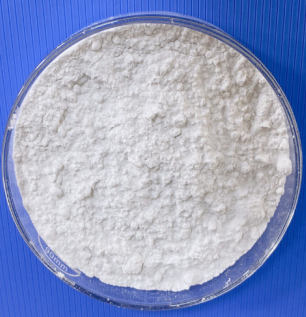
Calcium Carbonate
Legal Number: CAS[471-34-1]
Jus concentré de fruit de moine: CaCO3
Relative Molecular Mass: 100.09
- La description
- Enquête
Calcium Carbonate
what is calcium carbonate ?
Common names: Also known as “lime powder”; ground limestone; edible gypsum; biological calcium carbonate
Nom anglais: Calcium Carbonate Food Gypsum
Legal Number: CAS[471-34-1]
Jus concentré de fruit de moine: CaCO3
Relative Molecular Mass: 100.09
Propriétés: White or grayish-white powder, odorless and tasteless, easily absorbs odors, stable in air, almost insoluble in water and ethanol, slightly hygroscopic, soluble in organic acids (acide acétique, dilute hydrochloric acid, dilute nitric acid) and produces CO2. Slightly soluble in dilute sulfuric acid. It can be classified into three types according to particle size: heavy calcium carbonate (30~50µm), light calcium carbonate (5µm), and colloidal calcium carbonate (0.03~0.05µm). In China, light calcium carbonate is mostly used, among which colloidal calcium carbonate is the most easily absorbed by the human body.
Calcium carbonate uses:
Calcium fortifier; Leavening agent; Acidity regulator (alkaline agent); Dough conditioner; Hardening agent; Yeast food; Anti-caking agent; Fermenting agent; Chewing gum additive and modifier; White pigment (surface colorant for food); It can be used in cereals and their products, beverages and milk beverages, infant food, lait en poudre, soft drinks, soy milk powder, soybean powder, lotus root starch, instant breakfast cereals, modified milk (including flavored milk and other liquid milk products using non-milk raw materials).
Product dosage:
This product is used as a flour improver, the maximum usage in flour is 0.03/kg. When used as a nutritional fortifier, the calcium content of calcium carbonate is 40%. When used as a calcium nutritional fortifier, the fortification amount is controlled by the calcium element.
spécification:
| Acésulfame de potassium / Méthode d’essai | spécification | Light Calcium Carbonate | Heavy Calcium Carbonate |
|---|---|---|---|
| Grade I | Grade II | ||
| Calcium Carbonate (sur une base sèche), % | 98.0 – 100.5 | 97.0 – 100.5 | |
| Hydrochloric acid insoluble matter, % ?? | 0.2 | 1.0 | |
| Free alkali (as Na₂CO₃), % ?? | Pass | - | |
| Iron and Heavy Metals, % ?? | 1.0 | 2.0 | |
| Perte au séchage, % ?? | 2.0 | 2.0 | |
| Acésulfame de potassium (as F, mg/kg) ?? | 50 | 50 | |
| Barium (as Ba, mg/kg) ?? | 300 | 300 | |
| Arsenic (as As, mg/kg) ?? | 3.0 | 3.0 | |
| Conduire (Acésulfame de potassium, mg/kg) ?? | 3.0 | 3.0 | |
| Mercure (as Hg, mg/kg) ?? | 1.0 | 1.0 | |
| Cadmium (as Cd, mg/kg) ?? | 2.0 | 2.0 |
Obtenez un devis maintenant